
Artificial intelligence is transforming how people plan travel and it’s already reshaping the hotel booking journey. With Google launching their AI-powered travel tool Canvas that builds personalised itineraries by combining search, maps, flights and hotels, travellers are shifting toward AI-assisted planning. For independent hotel owners and operators, this is both an opportunity and a challenge. To stay competitive, hotels must adapt their marketing and operations to align with this new, tech-first reality.
The Rise of Travel Planning With AI
AI is quickly becoming central to how travellers research and book trips. The recent Travala survey showed over 40% of travellers already use AI tools such as ChatGPT for planning, and more than 60% are open to it. With travellers typically browsing over 140 pages before making a booking, AI helps reduce overwhelm by delivering personalised, relevant recommendations instantly.
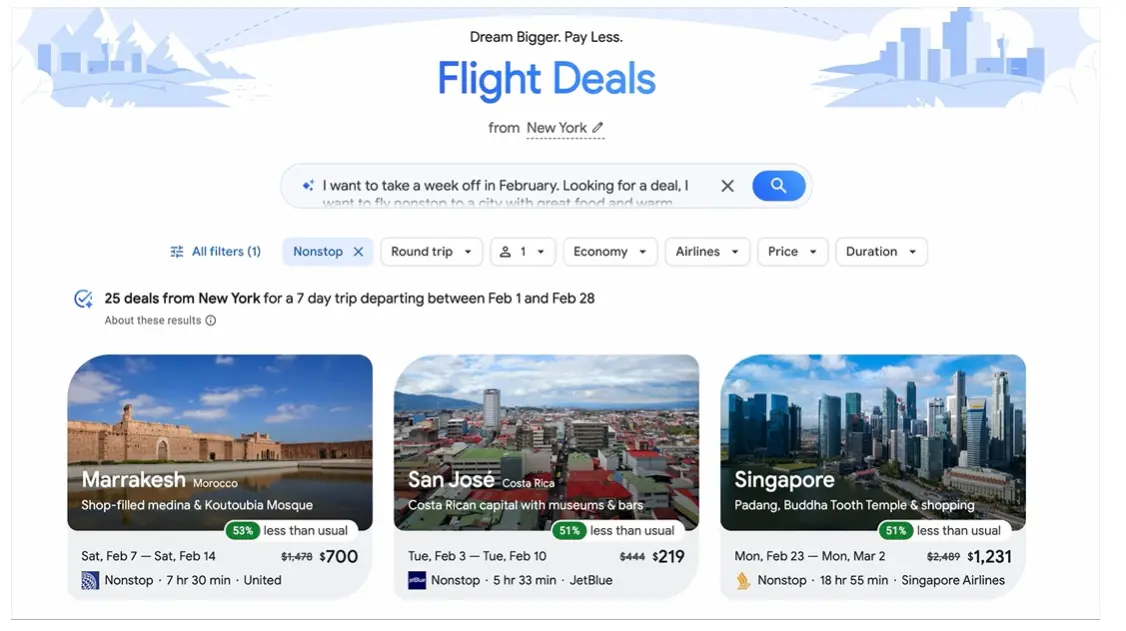
Google’s new AI Mode Canvas accelerates this shift. Travellers can ask for ideas like “family road trip in Cornwall” or “backpacker tour of Western Australia,” and Google instantly generates a personalised itinerary with hotels, flights, maps and food options. Planning becomes conversational, not search-driven. For hotels, understanding these shifts is essential to staying visible in the discovery phase.
How AI is Transforming Hotel Marketing & the Hotel Discovery Process
Generative AI is changing how travellers discover hotels. Instead of searching for specific properties, travellers ask broad, theme-based questions and AI responds by suggesting activities, routes and hotels that fit the itinerary.
Independent hotels must ensure they appear in these AI-curated trip plans. This requires:
- Strong online content that positions the hotel within regional themes.
- Clear, consistent information across the web.
- Reviews and social proof that validate quality.
- SEO and content that answer conversational, long-tail questions.
SEO is not dead and remains crucial. AI tools pull answers from a limited set of trusted sources, Google, being one of them, is invaluable. A strategic digital presence helps ensure your hotel appears in AI-generated travel recommendations. (For deeper SEO tactics to keep your site visible even as search becomes more AI-driven, see our guide on Mastering Your Hotel Website SEO.)
What Google’s New AI Travel Search Means for Hotel Bookings
Google’s AI travel updates blend research and booking into one seamless experience. Soon, travellers will be able to book flights and hotels directly through AI Mode, without visiting individual websites.
Opportunities for hotels:
New channels for direct bookings if your availability, rates and content are optimised for Google’s systems.
Visibility through AI-driven itineraries and conversational recommendations.
Increased referral traffic many hotels are already reporting bookings coming from ChatGPT-generated suggestions.
Risks:
AI will pull hotel information from the most reliable sources, often OTAs, which may further strengthen their dominance. OTAs like Booking.com and Expedia already feed data into ChatGPT and other AI platforms.
Since OTAs are unlikely to be displaced, hotels should use them strategically to ensure that their cost of acquisition does not markedly increase.
Turning OTAs Into a Direct-Booking Engine
Instead of viewing OTAs as “the enemy,” treat them as top-of-funnel marketing tools. The goal is to capture the guest once via an OTA then convert them into a direct booker next time.
How to convert OTA guests into loyal direct bookers:
- Capture guest data (with consent) during their stay to personalise future communications.
- Offer incentives for direct bookings.This can be executed in different aspects, however showing increased value is always crucial.
- Deliver exceptional service so guests prefer booking directly with you in future.
- Follow up post-stay with personalised offers redeemable only on your website.
With strong onsite experience and a high-performing booking engine, OTA guests become a profitable long-term revenue source.
Our OTA management, can help boost your hotel’s visibility and drive more bookings by strategically managing your distribution across the right platforms
How Hoteliers Can Prepare for AI-Driven Travel Planning
1. Structured Data Markup
AI tools rely heavily on structured, machine-readable information. Implementing Schema markup (Hotel, Ratings, FAQs, Amenities) tells AI exactly what your property offers. Add structured FAQs and clear headings to make your website “AI-friendly.”
2. High-Quality Local Content
AI doesn’t analyse your hotel in isolation, it analyses the whole trip. Create destination-focused content such as:
- Local guides
- Itineraries
- Attraction lists
- Neighbourhood pages
This improves SEO and increases your chances of appearing in AI-generated itineraries.
3. Reviews & User-Generated Content
AI uses reviews to validate hotel quality. Encourage more Google, TripAdvisor and OTA reviews, respond to them, and showcase user-generated content. Keep listings consistent across all platforms to boost trust signals.
(Need help implementing these changes? From schema markup to content creation to review management, our team can assist. Explore our Hotel Digital Marketing Services to see how we help hoteliers thrive in the digital landscape.)
Future-Proofing Hotel Marketing with AI
Adapting to AI goes beyond marketing; it’s about integrating AI into operations.
Marketing & Content Creation
Generative AI reduces time spent writing blogs, emails, and social content.
Example: Ovolo Hotels adopted Nodal AI for content creation and saw a 70% reduction in production time and a 43% increase in engagement.
Customer Service Automation
AI chatbots can answer repetitive questions and handle multilingual queries 24/7, freeing staff to deliver personalised service.
Revenue, Ops & Insights
AI tools help with:
- Dynamic pricing
- Staff scheduling
- Review sentiment analysis
- Demand forecasting
- This leads to faster decisions and improved profitability.
But remember: AI does not replace hospitality, but rather enhances it. As the saying goes, “AI doesn’t deliver hospitality; people do.” Hotels that find the right balance of automation and human touch will thrive.
(Remember, even if you’re a small independent property, you can leverage AI effectively – you don’t need an in-house tech team or an unlimited budget. For more inspiration and practical tips, check out our blog on How Independent Hotels can Efficiently Leverage AI.
Final Thoughts: Embracing AI-Powered Search
AI is reshaping the travel experience and independent hotels that adapt early will gain an edge. By combining AI-enhanced marketing with authentic hospitality, hotels can boost visibility and grow direct bookings.
Future-ready hotels will:
- Optimise their digital presence for AI discovery
- Strengthen SEO and destination-led content
- Use structured data and strong reviews to build trust
- Leverage OTAs as marketing channels, then convert guests to direct
- Adopt AI tools internally to improve efficiency
- Keep genuine human hospitality front and centre
AI isn’t replacing the hotelier, it’s empowering those who embrace it.
If you’re ready to elevate your AI strategy, Nuvho can help strengthen your revenue, marketing and sales performance.
Start a conversation direct with one of our leadership team!




© Nuvho Pty Ltd, All Rights Reserved